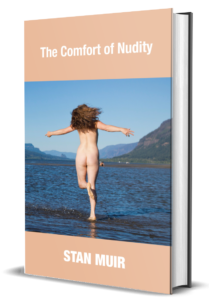
After discovering how profoundly slowness reshaped my journeys—how leaving the rush behind opened space for the world to truly touch me—I felt ready to lighten the load even further. Now, when I hike, I only carry a small backpack sitting easy on my bare back, skin free to the sun and wind. In it are bare essentials, a short for cover in case of encounter, a bottle of water, a few fruits and biscuits, a light windbreaker in case of unexpected change of weather and a first-aid kit. The essentials protect me; the absence of excess liberated me.
We carry far more than we need. The myth persists: true preparedness demands abundance. Pack for every contingency—rain that might turn to snow, paths that might demand boots, evenings that might require “proper” attire. We’ve convinced ourselves that security lies in stuff, that lightness invites risk. But in reality, excess often creates the very burdens we fear. It weighs us down physically, clutters the mind, and distances us from the land’s provision. Simple nudity, especially on the trail, reveals the deeper truth: the body is resilient, adaptable, already equipped. Shedding clothing while keeping smart essentials honors both safety and freedom.
The misconception is understandable. We’ve been taught that vulnerability equals danger. That going light means going reckless. Yet watch experienced backpackers or long-distance pilgrims—they pare down ruthlessly, trusting skill and nature over surplus. Naturism amplifies this wisdom. When you hike bare, you learn the body’s true needs: sun for warmth, movement for circulation, shade for cooling. Clothes become optional tools, not mandatory armor. What begins as practical minimalism becomes a profound shift—carrying less forces reliance on presence, on reading the weather in your skin, on trusting the path and yourself.
Let me share how this lightness unfolded for me, in three interconnected layers.
- First layer: the physical ease. A heavy pack changes everything—straps dig in, sweat builds under layers, fatigue sets in early. Switching to ultralight gear with minimal clothing transformed that. For a few days hike, my pack weighs under eight kilograms fully loaded: compact shelter for storms, warm quilt for nights, essentials for navigation and health. Walking naked most of the time, the straps sat comfortably on bare shoulders, no chafing from damp shirts. Energy flowed into steps, not strain. I covered more ground joyfully, feeling the trail’s texture underfoot, the breeze regulating temperature better than any jacket. Safety wasn’t compromised; it was enhanced by mobility and awareness.
- Second layer: the mental clarity. Excess demands constant management—deciding what to wear, when to change, how to dry things, what to protect. Strip that away, and the mind quiets. One spare outfit meant no morning debates. No laundry worries at remote streams. The essentials—map, repair kit, emergency beacon—handled real risks without cluttering thought. Space opened for immersion: noticing wild herbs for tea, pausing to watch eagles circle, sharing silent moments with fellow hikers met along the way. I’ve ended heavy-pack trips exhausted before starting. This time, arriving at each campsite light in body and mind, evenings stretched long with star-gazing and reflection.
- Third layer: the sustainable harmony. Every unnecessary item carries an environmental cost—production, transport, eventual waste. Overpacking feeds that cycle. By choosing ultralight camping gear and naturist minimalism, we reduce it dramatically. Fewer clothes mean less water for washing, less detergent in streams, lower overall consumption. The body becomes central: it dries quickly in sun, warms with movement, cools in shade. You learn to camp leave-no-trace intuitively, feeling the earth’s rhythms directly. The planet benefits—and so does the spirit, unencumbered by guilt or excess.
Philosophically, this echoes timeless insights grounded in lived necessity. Pilgrims on ancient routes carried little, trusting providence. Diogenes discarded even a cup upon seeing a child drink from hands. Modern ultralight pioneers like Andrew Skurka prove base weights under five pounds sustain multi-week journeys safely. In our consumer-driven age, traveling naked of excess—essentials secure, clothing optional—is rebellion and remembrance. It’s affirming the body’s wisdom, the land’s generosity, the moment’s abundance. Not austerity, but abundance in simplicity.
This approach is profoundly accessible. You don’t need extreme wilderness. Begin with overnights: invest in quality lightweight gear—a durable pack, reliable shelter, basic safety items. Minimize clothing: multi-use pieces, or none when privacy allows. Test on familiar trails. Feel the shift. For longer journeys, plan with naturist principles—routes with secluded spots, awareness of laws, always respect for others.
Because the revelation is this: with essentials covered and excess shed, travel becomes pure engagement. The pack supports without dominating. Skin meets world unmediated. Joy arrives not despite lightness, but because of it.
Get Nude, Stay Nude, Live Nude, and Share the Nude Love!